That Festival Sale Coupon on WhatsApp Could Be Fake: 7 Checks Before You Tap
A message promises a limited festival coupon, free gift card, cashback voucher, or lucky draw prize. It looks harmless, but the link may be built to steal your login, UPI details, contacts, or money.
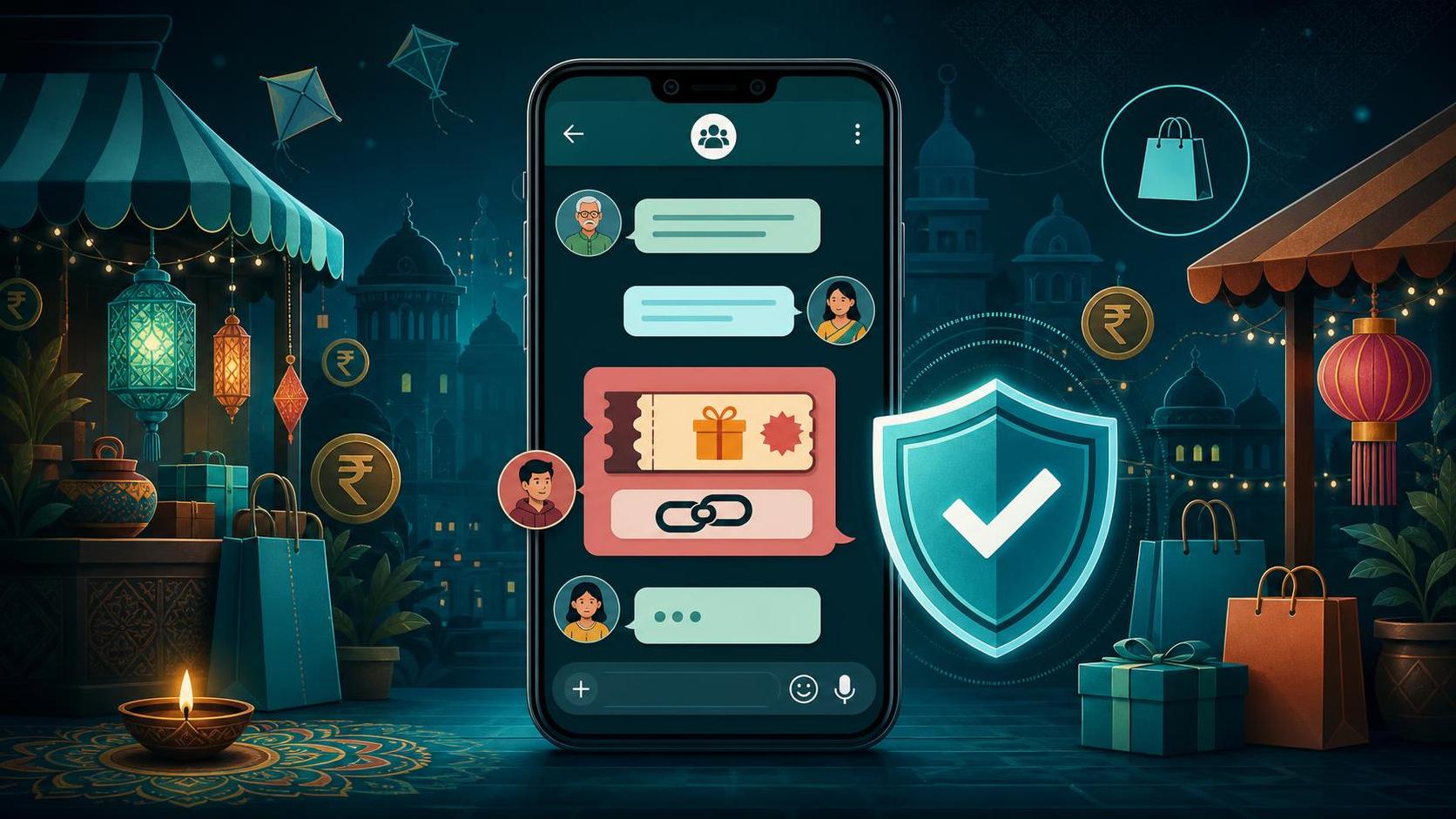
Festival sales are perfect cover for scammers. Everyone expects discounts, flash deals, bank offers, and delivery updates. A fake coupon can blend into the noise of Diwali, Eid, Raksha Bandhan, Christmas, New Year, back-to-school shopping, or a big marketplace sale. The message often arrives from someone you know because they tapped it first.
The scam usually starts on WhatsApp, Telegram, SMS, Instagram DMs, or a family group. You see a copied brand logo, a countdown timer, a scratch card, a small survey, or a promise that the first 500 people will get a reward. The page asks you to share the link with several contacts before claiming the offer. That sharing step is the engine of the scam.
The rule that blocks most coupon scams: Do not open shopping offers from forwarded links. Search for the store yourself, open the official app, and check whether the same offer exists there.
1. The link does not match the real brand domain
A copied logo is easy. A real domain is harder. Check the address before you tap, especially if it uses extra words, random numbers, spelling changes, or short links. A fake page may look like a shopping site but sit on a free hosting domain or a name that only resembles the brand. If the offer is real, it should appear inside the official app or website without needing a forwarded link.
2. It asks you to forward before you claim
Real discounts do not need you to spam ten contacts. Scam pages use sharing gates because family trust does the distribution for them. The link feels safer when it comes from a cousin, school parent, colleague, or neighborhood group. Ask the sender whether they actually received the reward. Most of the time, they only reached another step in the fake claim flow.
3. The reward is too broad and too easy
Be careful with messages promising free phones, instant gift cards, 90 percent discounts, fuel vouchers, supermarket coupons, or cash prizes for answering three questions. Scammers choose rewards that feel useful to everyone. A real sale may be generous, but it still has clear terms, product limits, payment rules, and a visible place in the official store.
4. It asks for payment to unlock a prize
A common trick is the small-fee trap. The page says your coupon is ready, but you must pay a delivery fee, platform charge, GST, verification amount, or refundable deposit. Even a tiny payment can expose card details, UPI approval screens, or banking credentials. If a free voucher needs money first, treat it as a warning.
5. It asks for an OTP, PIN, or screen share
No shopping coupon needs your bank OTP, UPI PIN, email login code, or remote access app. If a caller or chat support agent says they need to verify your prize by watching your screen, end the conversation. OTPs approve actions. UPI PINs send money. Screen sharing can expose messages, wallets, saved cards, and password reset prompts.
6. The page uses pressure instead of proof
Countdown timers, "only 12 coupons left" banners, fake comments, and spinning wheels are designed to stop you from checking. Pause for thirty seconds. Open the brand's official app. Search the web for the exact offer name plus the word scam. If the message is real, it will survive a basic check. If it disappears when you slow down, that tells you enough.
7. The proof is only a screenshot
Fake coupon screenshots can look polished. They may show a copied brand logo, a fake order ID, a supposed winner list, or a payment confirmation. Screenshots are not proof that a sale exists or that a person received money. Before forwarding, ask for the official source link from the brand's app or verified social account.
What to do if you already tapped
If you only opened the page, close it and do not forward it further. If you entered a password, change it from the official app or website. If you shared an OTP, card number, UPI details, or paid a fee, contact your bank or wallet provider immediately. In India, report online financial fraud through 1930 and cybercrime.gov.in as soon as possible.
The family rule for festival offers
Make one simple rule for family groups: no one forwards coupons, lucky draws, gift cards, or shopping links unless they can find the same offer inside the official app. This protects parents, grandparents, students, and busy shoppers who may tap quickly during sale season.
How FakeOut helps
Coupon scams often travel as images: sale posters, edited screenshots, fake winner notices, and copied payment confirmations. FakeOut helps you check whether an image or screenshot may have been manipulated before you trust it, forward it, or act on it.